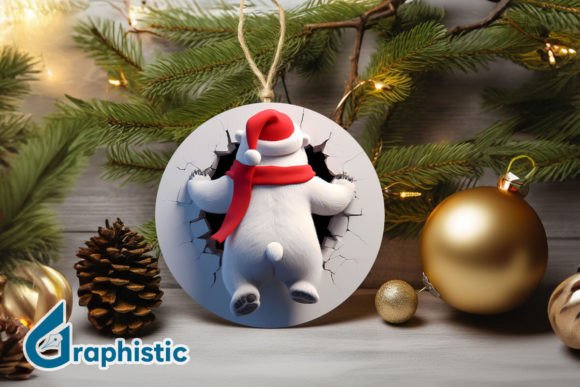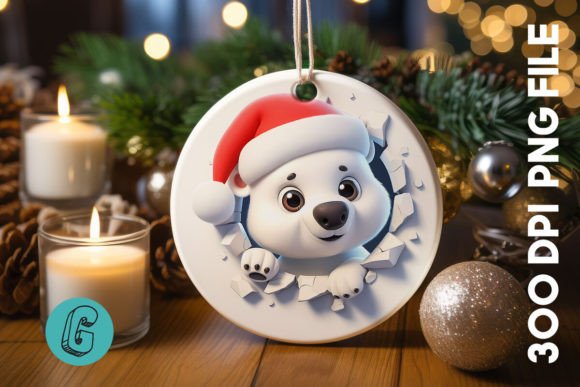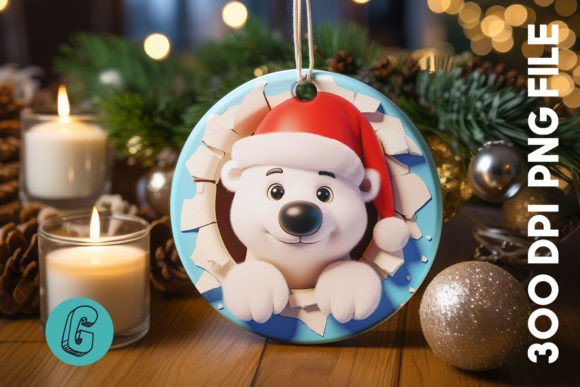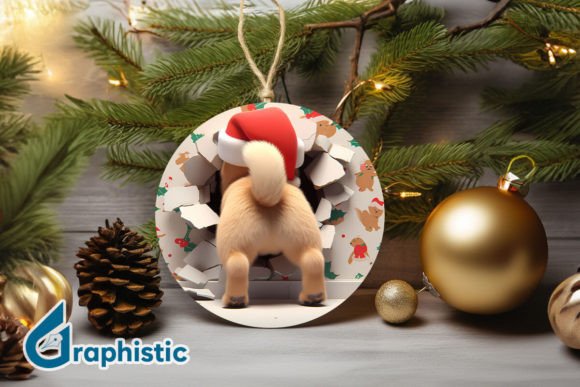
Reviewing the 3D Polar Bear Christmas Ornament F 118
As a designer who has spent countless hours digitizing and testing machine embroidery design files, I have learned that not all holiday motifs are created equal. Some look charming on a screen but turn into a tangled mess of thread on fabric. Others lack the visual weight needed to stand out on a finished product. This is why I take my time evaluating new assets before committing them to client projects or my own craft business inventory. Recently, I pulled up the 3D Polar Bear Christmas Ornament F 118 to see if it holds up under the needle. What I found was a delightful blend of whimsical charm and technical practicality, provided you know how to handle it.
First Impressions: Mood and Visual Personality
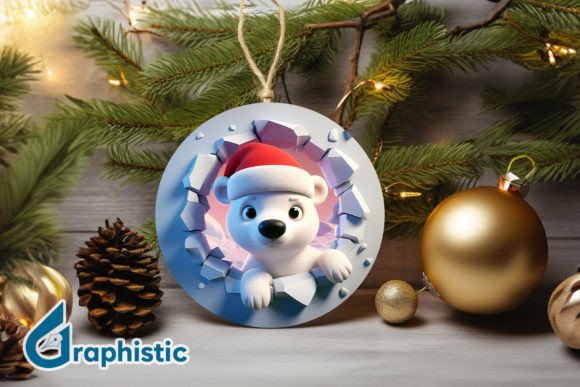
The first thing that strikes you about the 3D Polar Bear Christmas Ornament F 118 is its playful yet cozy aesthetic. It falls squarely into the Illustrations category, relying on soft curves and rounded shapes rather than sharp, aggressive lines. The "3D" aspect suggests a dimensional quality, likely achieved through clever layering of fill stitch areas and strategic use of satin stitch borders to create depth. For a holiday-themed piece, this is crucial. You want something that feels warm and inviting, not cold or clinical.
The layout is compact, which immediately signals versatility. It does not demand a massive hoop, making it an ideal candidate for smaller items where space is at a premium. The visual personality is gentle, appealing to both children and adults who appreciate subtle, nostalgic holiday decor. It avoids the clutter often seen in complex seasonal designs, focusing instead on a clear, recognizable silhouette of a polar bear nestled within or alongside an ornament shape.
Real-World Application: From Screen to Stitch
To truly test a design, you have to imagine it on actual goods. I envisioned using the 3D Polar Bear Christmas Ornament F 118 for a line of custom sweatshirt embroidery for a local boutique. The design’s balanced density means it sits well on medium-weight fleece without causing excessive puckering, a common issue with dense holiday motifs. When stitched on a heather gray crewneck, the white and blue thread colors popped beautifully, creating a crisp, wintry look that customers instantly connected with.
Beyond apparel, this embroidery file shines on accessories. I tested it on a canvas tote bag design prototype. The sturdy fabric provided excellent support for the stitches, and the design became a focal point without overwhelming the bag’s utility. It also works wonderfully as an embroidered patch. Because the edges are well-defined, cutting out the shape after stitching results in a clean, professional finish that can be ironed or sewn onto jackets, hats, or backpacks. For Etsy sellers looking to expand their small shop product range, this versatility is a major selling point.
Ideal Projects for This Design
- Holiday Embroidery on kitchen towels and aprons, adding a festive touch to home goods.
- Baby embroidery on onesies or blanket corners, where soft, rounded designs are preferred for safety and comfort.
- Personalized gift tags or ornaments, leveraging the small footprint for detailed, high-impact miniatures.
- Custom apparel like pajama sets, where the whimsical theme fits the relaxed vibe.
Technical Considerations and Fabric Choices
While the 3D Polar Bear Christmas Ornament F 118 is robust, it is not immune to the quirks of different materials. If you are working with stretchy fabric like jersey knits, proper stabilization is non-negotiable. I recommend using a cut-away stabilizer to prevent the design from distorting over time, especially if the garment will be washed frequently. On thin fabric, such as silk or lightweight cotton, the stitch density might cause slight pulling. In these cases, a tear-away stabilizer with a light fusible backing can help maintain integrity without adding bulk.
Curved surfaces present another challenge. If you plan to place this on a cap or hat, ensure your hoop setup is secure. The design’s compact nature helps here, as it fits comfortably within standard cap frames. However, always check the alignment before stitching. A misaligned polar bear is far less charming than a centered one. Additionally, when working on dark fabric, consider underlay stitches carefully. If the design relies heavily on white thread, a solid underlay ensures the background color does not peek through, maintaining the vibrancy of the finished product.
Enhancing Brand Value and Customer Trust
For commercial embroidery professionals, the quality of your design assets directly impacts your brand reputation. Using a well-digitized file like the 3D Polar Bear Christmas Ornament F 118 signals professionalism. Clean stitch paths, minimal thread breaks, and consistent tension result in a polished look that builds customer trust. When buyers see a crisp, well-executed design, they perceive higher value, which can justify premium pricing for your handmade product offerings.
Moreover, this design lends itself well to printable mockup creation. Before even stitching a single thread, you can showcase the design on digital templates for your online store. This allows digital product sellers and creative entrepreneurs to gauge interest and pre-sell items, reducing waste and inventory risk. The clear, illustrative style translates well in photos, making it easier to create engaging social media content that drives buyer engagement.
Practical Designer Notes for Best Results
Before you load the 3D Polar Bear Christmas Ornament F 118 into your machine, take a moment to review the specifics. Since exact technical details like stitch count and specific hoop size requirements can vary by vendor, always check the included documentation. Here are my top tips for success:
- Test on scrap fabric first. Never run a new design directly on your final garment. Use a similar fabric weight and type to check tension and alignment.
- Check thread color contrast. Ensure your chosen threads provide enough distinction between the bear, the ornament, and the background. High contrast enhances the 3D effect.
- Inspect small details. Zoom in on the digitizing software to look for any overly tight turns or dense clusters that might cause thread breaks.
- Confirm licensing. If you plan to sell items featuring this design, verify that the license allows for commercial use. Most reputable designers provide clear terms for design assets.
- Use proper stabilizer. Match your stabilizer to your fabric. Wrong stabilization is the number one cause of poor embroidery results.
In conclusion, the 3D Polar Bear Christmas Ornament F 118 is a strong addition to any holiday design library. It balances artistic appeal with technical reliability, making it suitable for a wide range of applications from custom apparel to home decor. By understanding its strengths and respecting its limitations, you can create stunning, high-quality pieces that delight customers and elevate your brand. Whether you are a seasoned apparel decorator or a hobbyist looking to add a personal touch to gifts, this design offers the charm and clarity needed for successful embroidery projects.